
What to Bring for a Power of Attorney Notary Signing
Bring the unsigned power of attorney, a current government photo ID for the person granting the power, and any witnesses the document requires. Wait to sign until the notary arrives.
Written by: Terry May
NNA-Certified Loan Signing Agent | Mobile Notary Public — 25+ years in Ohio lending
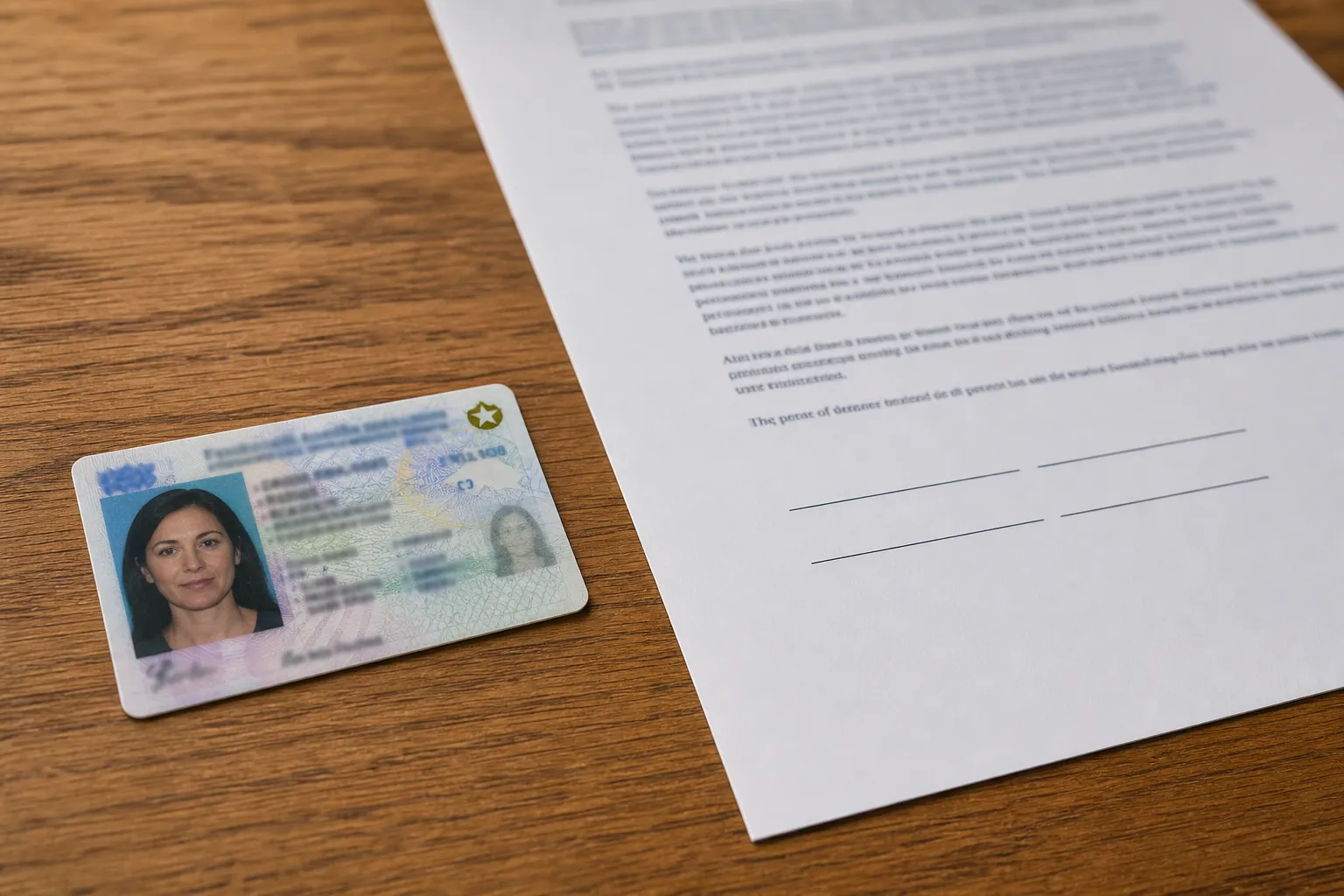
Before a notary can witness a power of attorney signing, three things need to be in the room: the prepared document, valid photo identification for the person granting the power, and any witnesses the document calls for. Getting those ready ahead of time keeps the appointment short, which matters most at a hospital bedside or a care facility where access and timing are tight. Signed On Time is a mobile notary that comes to you across Southwest Ohio, so here is exactly what to have ready.
Key takeaways
- Bring the completed but unsigned power of attorney, a current government-issued photo ID for the person granting the power, and any witnesses the document requires.
- Wait to sign until the notary is present and has confirmed identity; the document should be filled in by its preparer beforehand, with the signature lines left blank.
- Witness requirements depend on the specific document. The attorney or agency that prepared it confirms whether witnesses are needed and who may serve.
- In Ohio, a notarial act costs up to $5 per act (not per signature). A reasonable travel fee may apply when agreed before the act, and Signed On Time confirms the full total before the appointment.
What do you need to bring for a notary to witness a power of attorney signing?
Bring four things: the prepared power of attorney document, a current government-issued photo ID for the person granting the power, any witnesses the document requires, and a way to pay the fee. The person granting the power is the principal, and that is the person whose identity the notary confirms and whose signing the notary observes.
Here is what each item covers:
- The document, filled in by the attorney, agency, or other preparer, but not yet signed.
- Photo ID that is current and matches the name on the document.
- Witnesses, if the document calls for them. The preparer tells you how many and who may serve.
- Payment, by cash, Venmo, or Zelle.
For a general checklist that applies to any notarization, not just a power of attorney, see what to bring to a notary appointment.
Should the power of attorney be filled in before the notary arrives?
Yes. The document should be complete, with the right names and powers already entered by whoever prepared it, before the appointment begins. The signature lines stay blank until the notary is present.
In my appointments, the most common reason a power of attorney signing stalls is not an identification problem. It is a document that is missing a page, missing the agent's name, or has blanks the signer cannot fill in on their own. A notary cannot complete those blanks or decide what belongs there. One recent visit in Warren County went like this: an adult daughter had her father's durable power of attorney ready from his attorney, but one copy was missing the page naming the agent. We paused, she reached the attorney's office, and the corrected page came through before we finished. Fifteen minutes, not a second trip, because the gap was fixed with the preparer instead of at the signing.
Signing early can mean the notarial act does not match what the document needs, and the page may have to be redone. Wait for the notary.
What ID does the person granting a power of attorney need?
A current, valid government-issued photo ID in the signer's name. The notary uses it to confirm the signer is who they say they are, which is the core of the notarial act.
If the ID is expired, damaged, in a different name than the document, or missing, tell us before the appointment. Identification rules change, and an unusual situation is better reviewed before we schedule than discovered at the door. Signed On Time does not promise in advance that a particular ID will be accepted or rejected; that is checked against current Ohio requirements.
Are witnesses required for a power of attorney?
Witness requirements depend on the specific document, and the preparer confirms them. Some powers of attorney need no witnesses, some need witnesses in addition to a notary, and the rules can differ between a financial power of attorney and a healthcare power of attorney or directive.
Because the attorney, agency, or other party prepared the document, that party knows what its signing requires. Ask them directly how many witnesses are needed and who is allowed to serve, since some people connected to the document cannot act as a witness. When witnesses are needed and you are arranging them yourself, have them present with their own photo ID. Signed On Time can coordinate witnesses when that service is confirmed in advance.
Does the attorney-in-fact need to attend the signing?
Usually no. The person who signs in front of the notary is the principal, the one granting the power. The agent being named, also called the attorney-in-fact, does not normally need to be present for the principal to sign and have that signature notarized, because the notary is confirming the principal's identity and witnessing the principal's signature.
The agent's role begins later, when they act on the principal's behalf. Signing as an agent for someone else is a separate kind of notarization with its own steps, which the National Notary Association describes in its guidance on how to notarize for a signer who has power of attorney.
What stays the attorney's job, not the notary's?
The notary is an impartial witness. Signed On Time confirms the signer's identity, observes the signing, completes the authorized notarial act, and keeps the required record. The notary does not choose the document, does not explain what the power of attorney means, does not decide whether it is the right form, and does not determine whether a signer has the capacity to sign.
Those choices belong to the attorney or other professional who prepared the document. If you are not sure a power of attorney is even the document you need, that is a legal question for an attorney, not the notary. For a closer look at where the line sits, see what a notary can and can't do with wills and POAs.
If the signer seems confused, sedated, or unable to communicate at the appointment, the signing may need review by the family and the appropriate legal or healthcare professional before it can go ahead.
How much does it cost to notarize a power of attorney in Ohio?
Ohio law permits up to $5 for a traditional or electronic notarial act, and that fee is not calculated per signature. A power of attorney package that needs more than one notarial act may carry the fee for each act. Because Signed On Time travels to you, a reasonable travel fee may also apply, and Ohio law allows that travel fee when it is agreed to before the notarial act.
The total depends on the service, your location, travel required, timing, urgency, and the details of the assignment. Signed On Time confirms the full total before the appointment, so there is no guessing at the door. Payment is by cash, Venmo, or Zelle.
To schedule a mobile power of attorney signing in Hamilton, Warren, Montgomery, Butler, Greene, or Clinton County, call 513-226-9052 or book an appointment.
Frequently asked questions
Do you sign a power of attorney before the notary arrives?
No. Leave the signature lines blank and sign once the notary is present and has confirmed your identity. The document should be fully filled in by its preparer beforehand, but not signed.
Can a notary come to a hospital or nursing home for a power of attorney signing?
Yes. Signed On Time is mobile and travels to homes, offices, hospitals, rehabilitation and nursing facilities, and other agreed locations across its Southwest Ohio service area. The document should already be prepared for signing, and facility access and the signer's readiness affect timing. For care-facility specifics, see notary visits to senior communities.
What identification does my parent need to notarize a power of attorney?
A current government-issued photo ID in your parent's name. If the ID is expired, damaged, or in a different name than the document, tell us before the appointment so it can be checked against current Ohio requirements rather than causing a delay at the signing.
Can a notary decide whether my parent is well enough to sign?
A notary does not diagnose or determine medical or legal capacity. The signer must be able to communicate, understand that they are signing the document, and willingly participate in the signing. If there is concern that your parent is confused, heavily medicated, unable to communicate, or does not understand what they are being asked to sign, the appointment may need to be postponed until the appropriate healthcare or legal professional determines that the signer is able to proceed.
How much does it cost to notarize a power of attorney in Ohio?
Ohio law permits up to $5 per notarial act, not per signature. A reasonable travel fee may apply for a mobile visit when agreed before the act, and the total depends on location, service, travel, timing, and urgency. Signed On Time confirms the full amount before the appointment.
Before We Arrive
Have your completed documents ready — unsigned. Bring a valid photo ID. If your documents require witnesses, ask us when you schedule and we will advise. We come to your home and work at your pace.
Related Situations
Need a Witness for Your Signing? How We Help Coordinate →
Not sure who can witness your will or POA — or where to find one for a hospital signing? Here is how we help coordinate disinterested witnesses across Southwest Ohio.
Wills & POA: What a Notary Can (and Can't) Do →
Clear up confusion: what Ohio notaries can and can't do for wills and powers of attorney—IDs, witnesses, and limits.
Trusts & Certification of Trust—Bank-Ready Signings →
Banks often ask for a Certification of Trust. Here's what to prepare so the notarization is quick and accepted.
Related Services
Hospital & Bedside Notary →
Bedside signings at hospitals, rehab, hospice, and senior living — coordinated with staff.
Wills, Trusts & Probate →
Wills, trusts, and probate documents notarized with full ID verification.
Real Estate Closings →
Purchase, refi, HELOC, and seller packages witnessed at the kitchen table or closing site.
We sit at kitchen tables across Warren, Hamilton, Butler, Montgomery, Greene, and Clinton counties for wills, POAs, and healthcare directives. If you're in Mason, Lebanon, Springboro, or anywhere in the Dayton-Cincinnati corridor, same-day home visits are usually available.
Ready to get these documents signed?
We come to your home, work at your pace. Most estate signings take 30-45 min.
25+ years in commercial and residential lending. Mobile notary serving Warren, Greene, Clinton, Butler, Hamilton, and Montgomery counties. Background screened, E&O insured, and impartial witness only — no legal advice.
Last reviewed